
Timing-based WWII tactics
Every shell is simulated.
Nothing is rolled.
Soviet and German tanks and infantry fight over villages, fields and towns. Armour is measured plate by plate. A round goes where it was fired, meets what stands in its way and leaves its mark there.
Three range tests, recorded in the game. Three distances, three shots each, one target per distance.
T-26 → Panzer I
- 9shots
- 7hits
- 7penetrations
- 3 / 3knocked out
IS-2 → Panzer IV G
- 9shots
- 8hits
- 8penetrations
- 3 / 3knocked out
KV-2 → Panzer I
- 9shots
- 4hits
- 2turrets torn loose
- 2 / 3knocked out
Misses stay in the count. Nothing is picked or replayed.
Armour penetration
Armour is measured, not rolled
Each tank is built from its real plates, each with its own thickness, slope and material. Every shell carries its own calibre, mass, speed, cap and fuze.
- The angle counts. A 13 mm plate struck at an angle is 15 mm of steel along the shell's path. Too shallow, and the round glances off.
- What gets through keeps going. The round carries on with the speed it has left. A filled shell bursts inside after its fuze delay; fragments and spall find the crew, the engine and the ammunition.
- Damage adds up. Holes stay where they were made, and the next shell meets the tank as the last one left it.
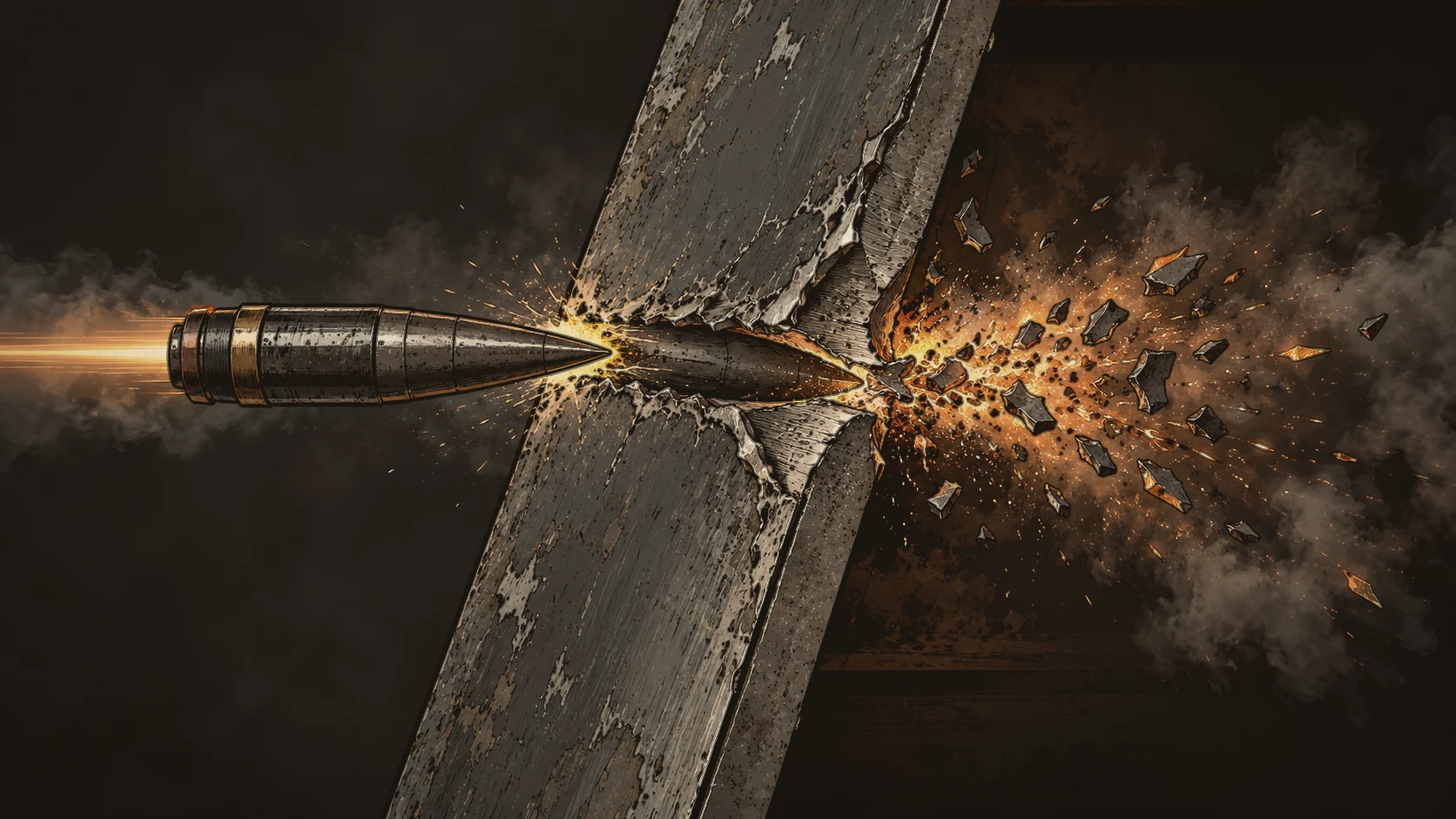
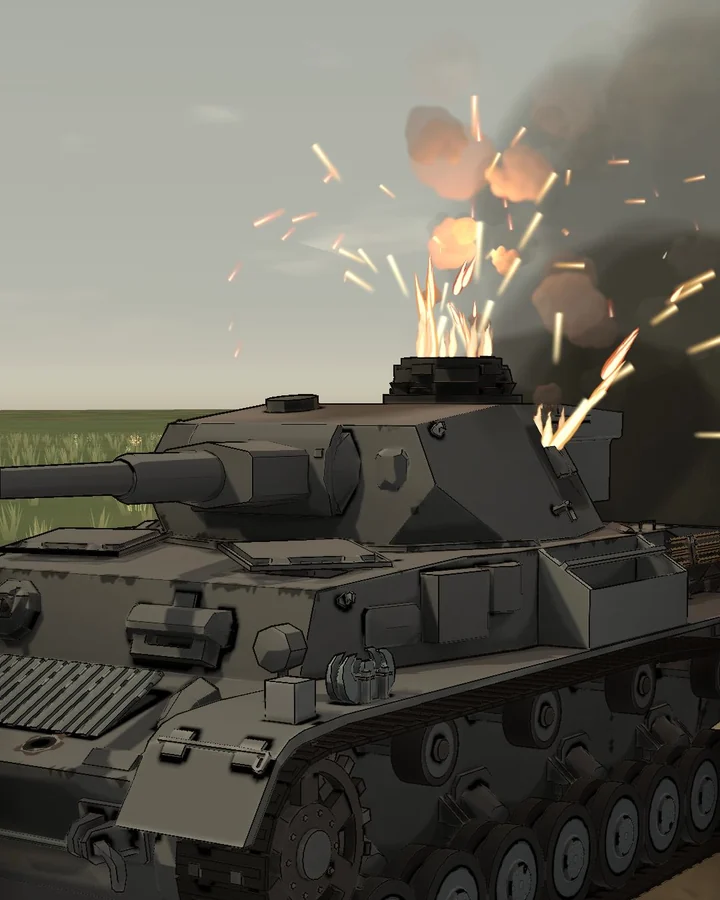
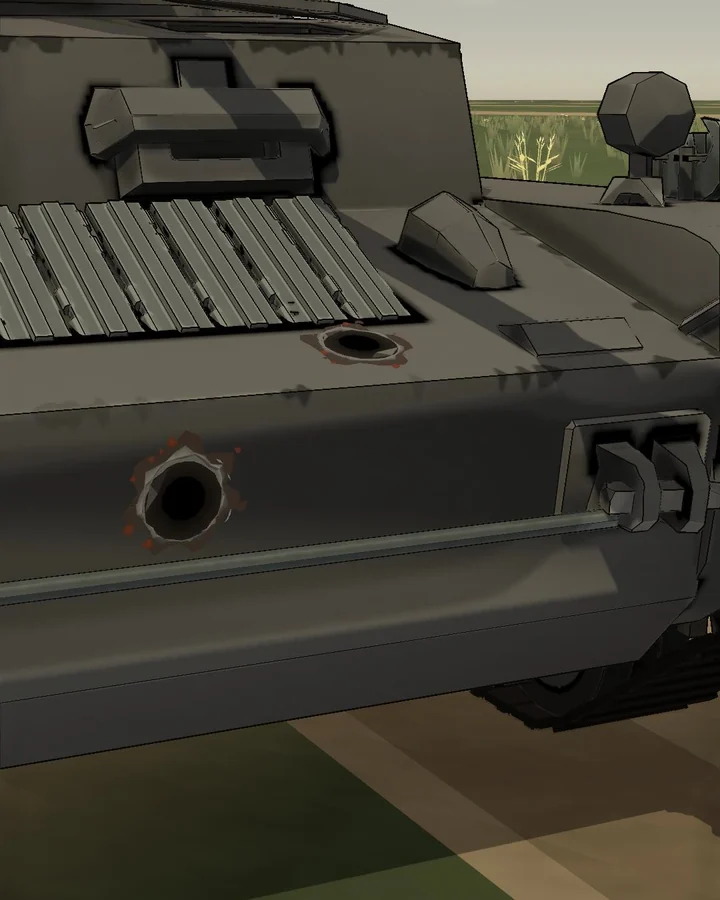
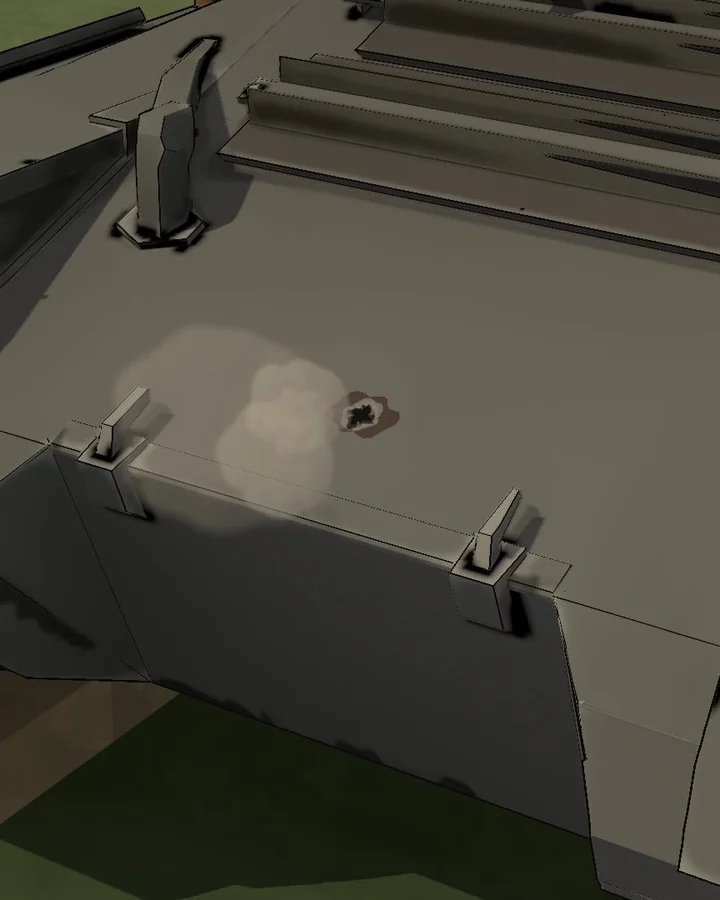
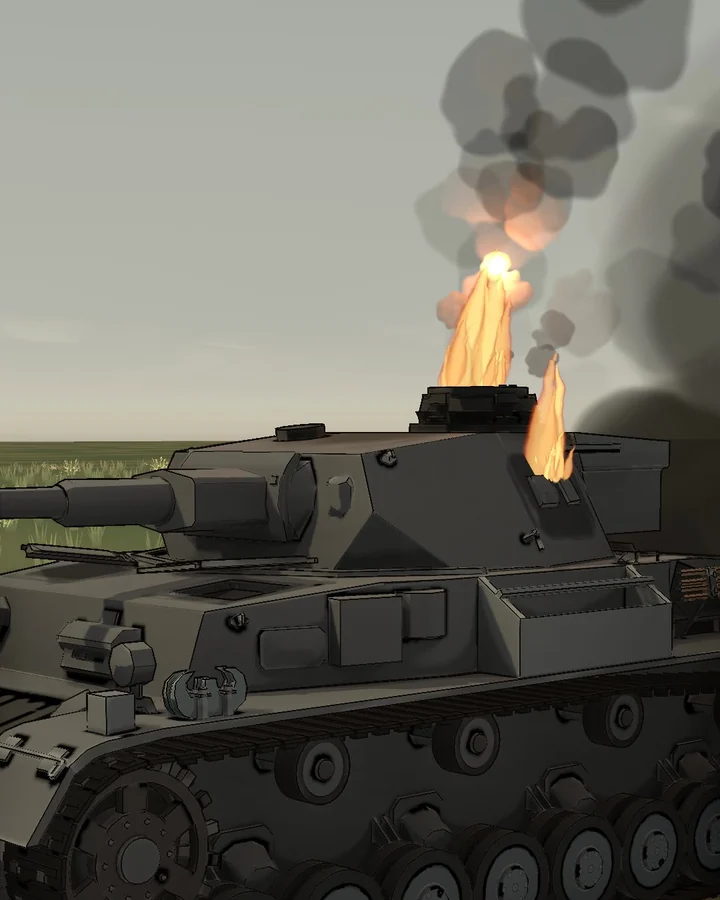
In-game footage in the Field Ink look, from the recorded range tests
Turrets and hatches
Hit hard enough and the turret jumps its ring
A 152 mm high-explosive shell carries almost 7 kg of explosive. Burst on a light tank, it tears off hatches and vision blocks and can lift the turret clean off its ring.
- Real physics, not a cinematic. What comes off depends on the charge, where it burst, each part's mass and how it is held. Against the Panzer IV G's thicker front, the same shell knocked out one tank of three in nine shots and unseated no turret.
- Every piece is tracked. Torn-off parts fly under gravity and stay where they land. Here the turret came down on the hull back to front, and the tank is written off for good.
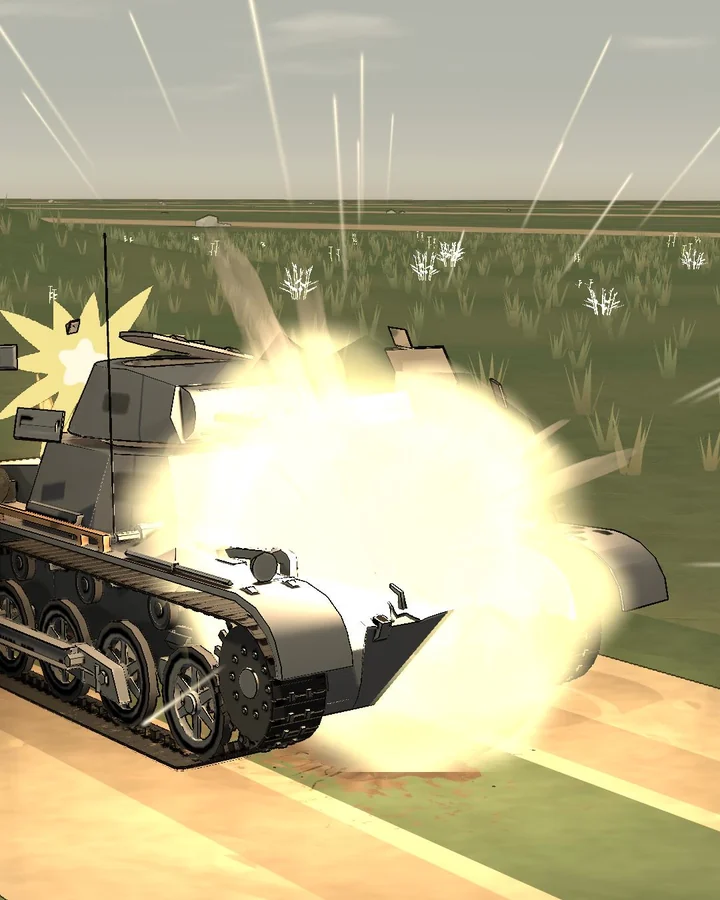
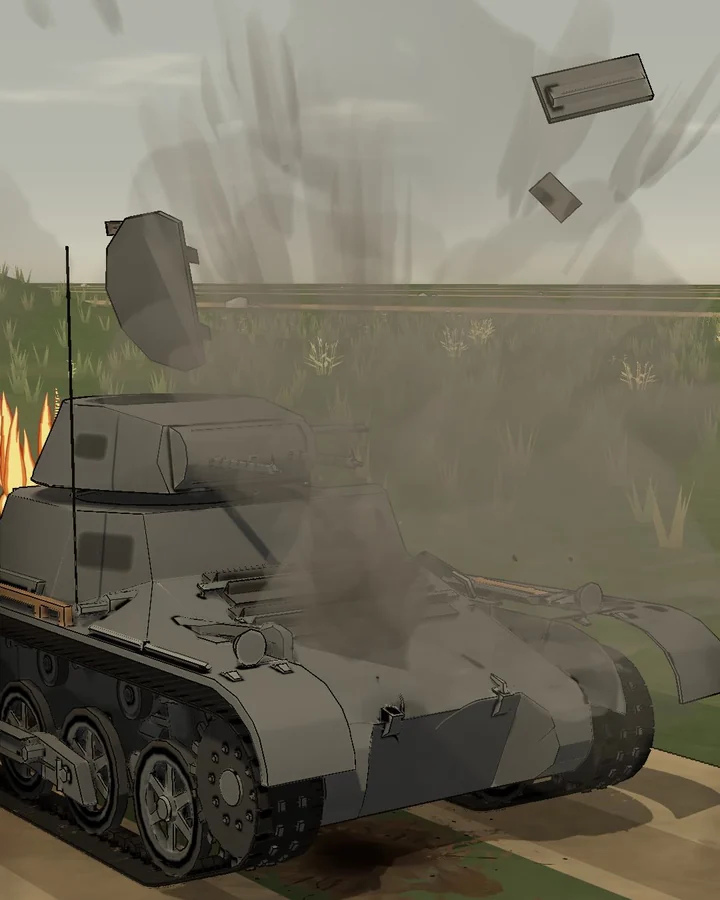
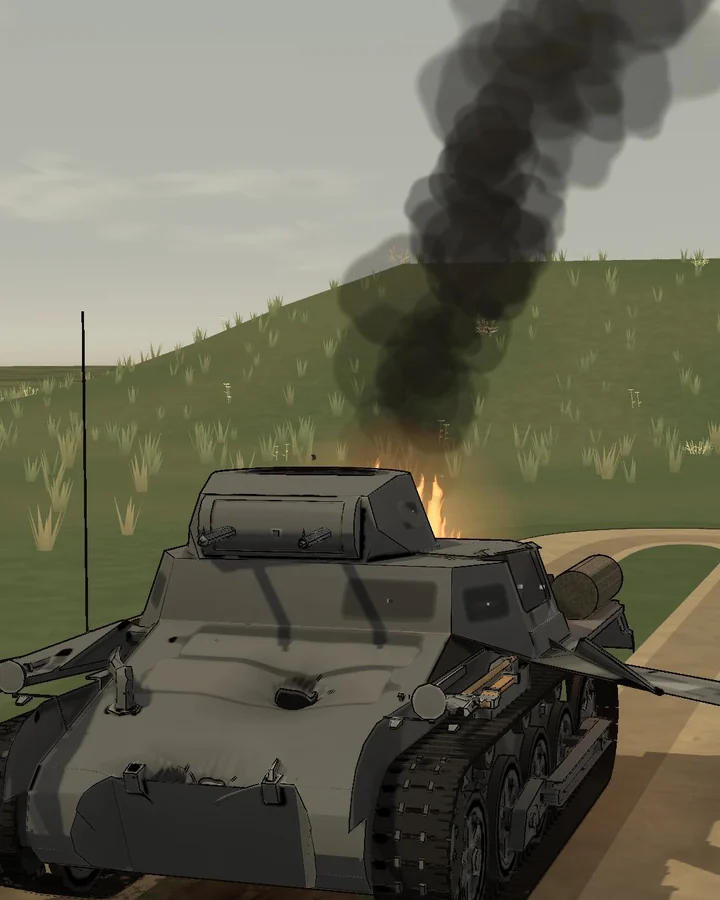
In-game footage in the Field Ink look: KV-2 against Panzer I, recorded range test
Destruction
Everything breaks where it is hit
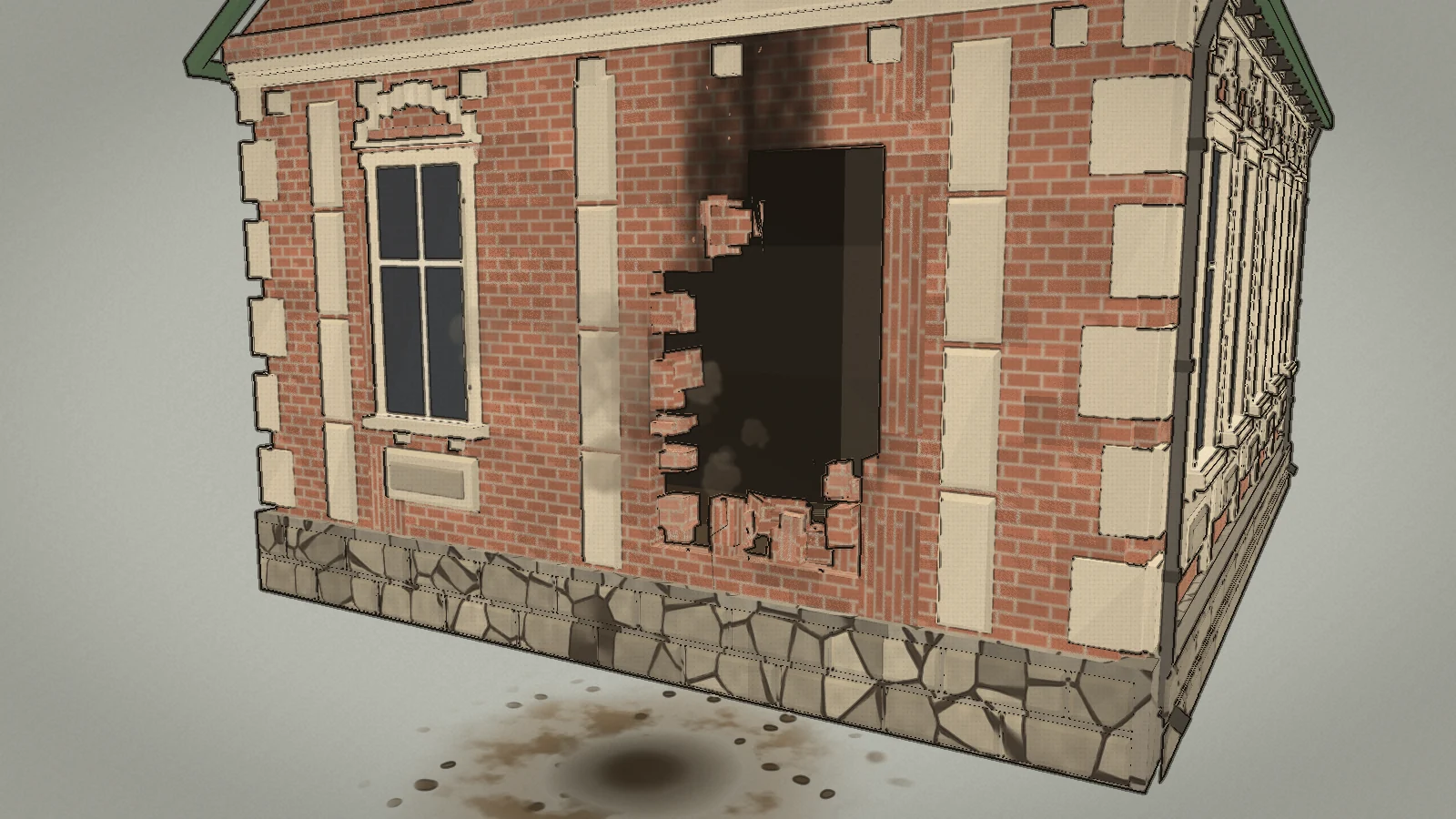
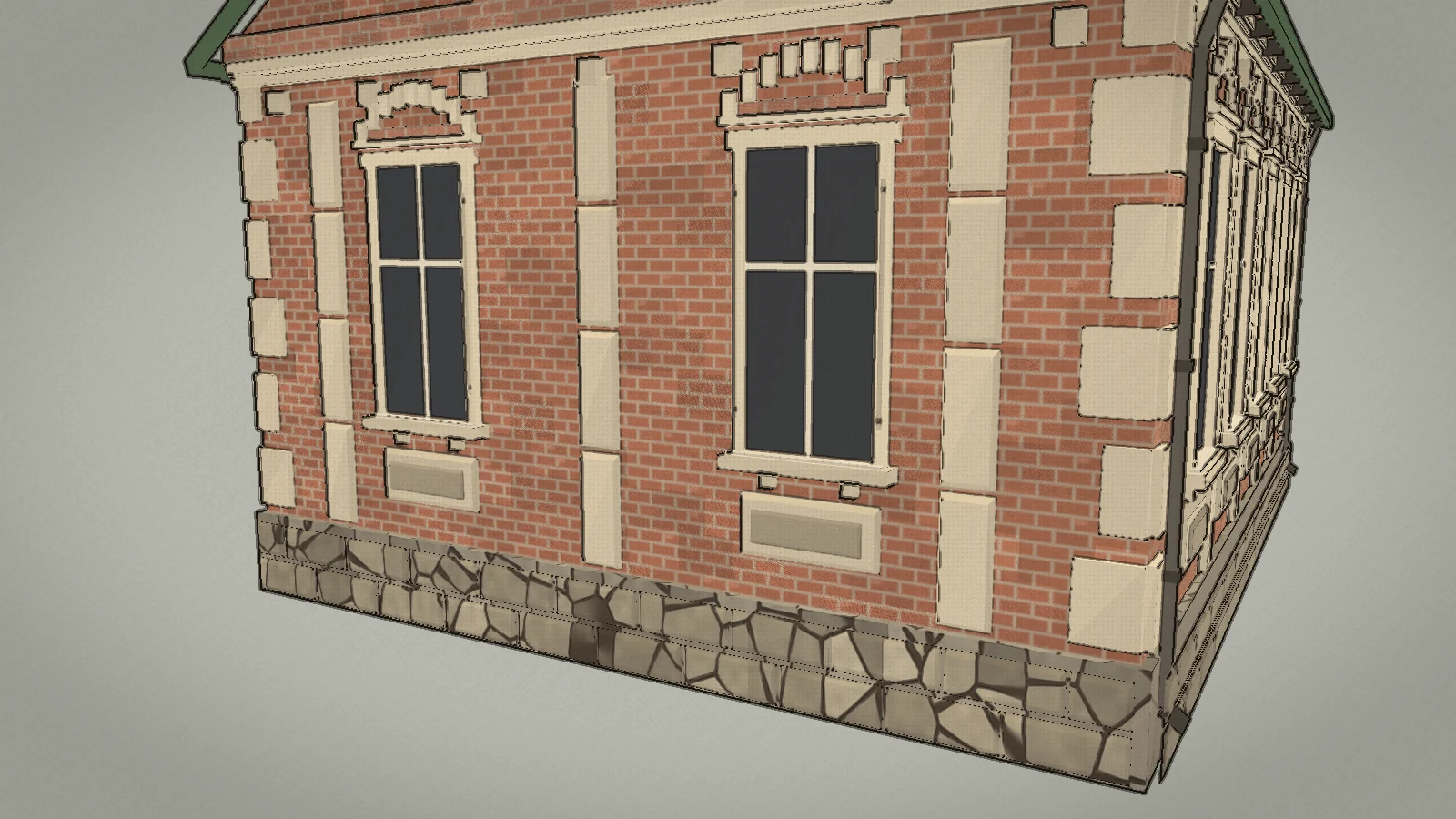
Drag the slider to fire. A high-explosive shell opens this brick wall. The breach is real: rounds and men can now pass through it, and the soot and rubble stay for the rest of the battle.
- Houses are built from their walls, floors and roofs. Walls breach, roofs fall in, towers topple onto their neighbours.
- Trees and brush stop bullets, burst shells in their branches, lose their leaves to blast and go down under a tank.
- Trenches and bunkers cave in under close hits; a roof that fails falls on the men under it.
- Each side sees only what it has seen. A house that fell out of sight still stands on your map until you look again.
The world
Villages, fields and towns of the Eastern Front
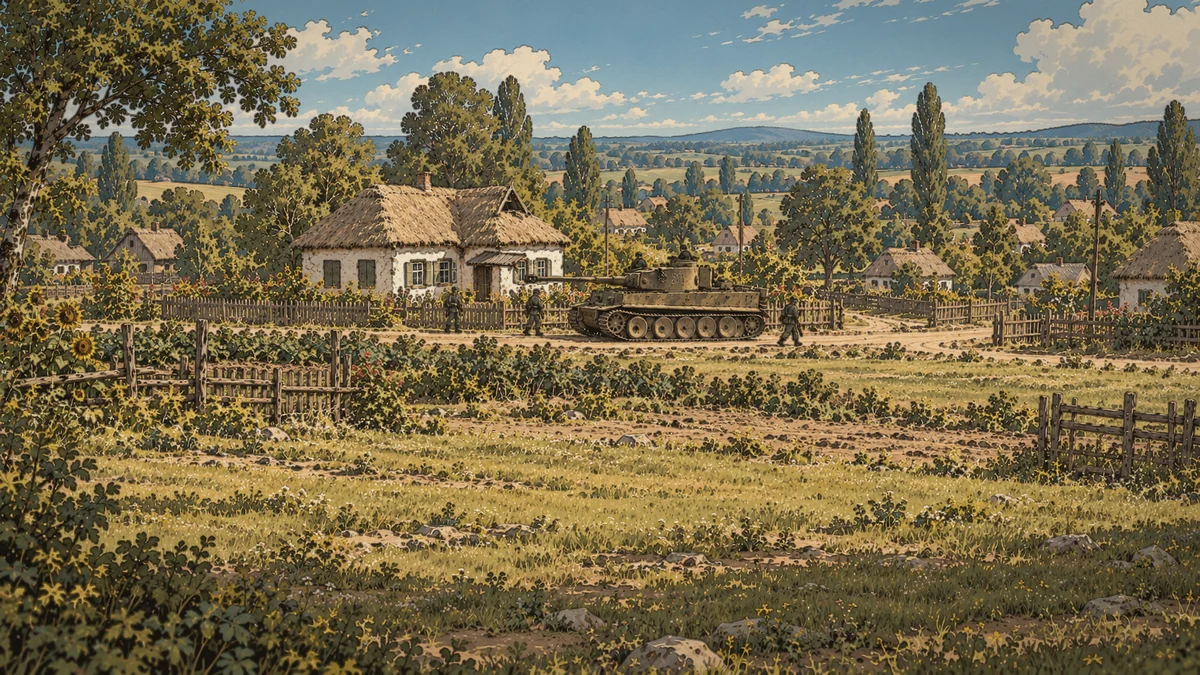
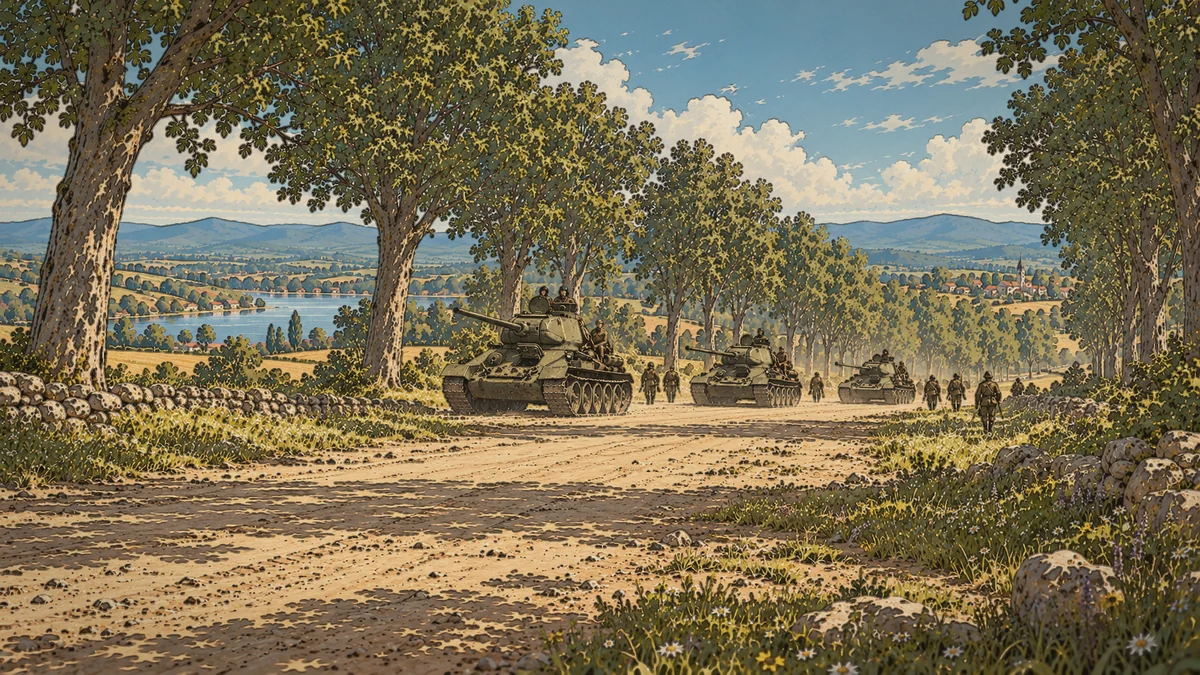
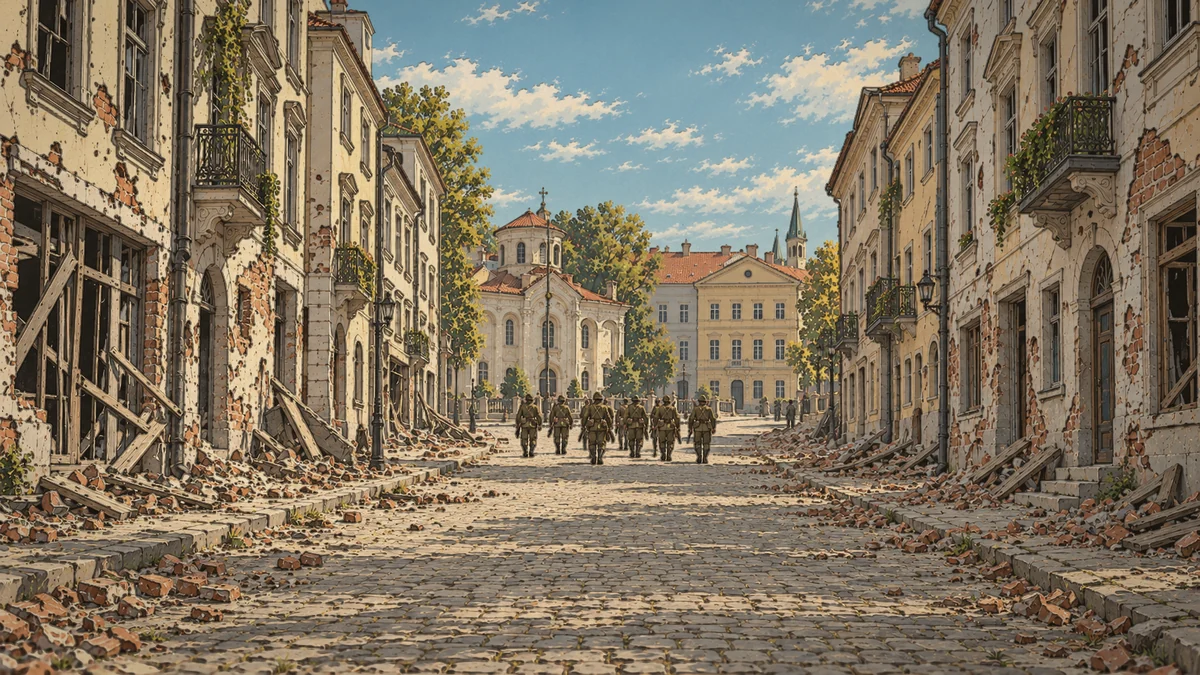
- Time is the currency. Driving, turning the turret, aiming and reloading all take time, and a tank caught turning is a tank caught in the open.
- Fog of war. You see what your men and crews can see; gunfire and burning wrecks give positions away.
- Card units and abilities. Call in tanks, squads, mortar strikes, wire and bunkers.
- Infantry that digs in. Holes, trenches and houses are real cover, and they can be blown in.
Development updates
Follow the game as it is built
PINCERLOCK is in development. We share what changes along the way: new tanks, new damage, new range tests. Subscribe and the updates come to your inbox, only when there is something worth showing.
One click to unsubscribe from any email. Your address is never shared.
- New tanks and units. Each one researched, measured and given its real armour, guns and ammunition.
- Range tests on video. Recorded shots with the real results, misses included.
- Destruction and physics. How houses, trees, trenches and armour break, and why.
- Playtests and release news. Announced to subscribers first, when there is a date.